

Put Karate into your everyday living; that is how you will see its true beauty.
Gichin Funakoshi
In Karate-Dō it is easy to zone in on the more physical aspects of karate training: kihon, kata and kumite. However, traditional Karate-Dō is also about how we conduct ourselves while learning them.
The Dōjō is not just a room where we come to learn karate. It is also a place where we learn discipline, respect, humility, responsibility, etc. These qualities are shown in the way we enter the Dōjō, the way we train, the way we train with others and how we present ourselves in general.
This is Dōjō Etiquette.
ENTERING THE DŌJŌ
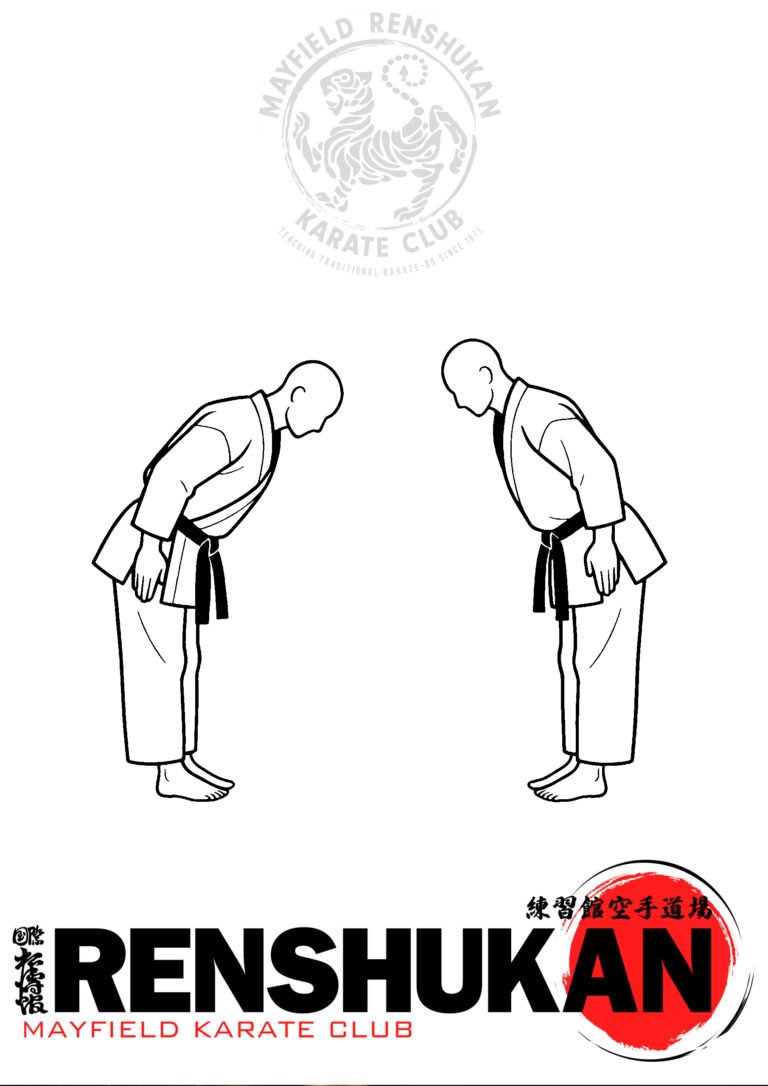
When entering the Dōjō, we bow.
This acknowledges the place where we train, the people who we train alongside and the tradition of Karate-Dō that we have inherited. It is also helps us change our mindset. Where we leave the distractions of everyday life outside the Dōjō and enter ready to train. The same applies when leaving. We bow before leaving the Dōjō, showing the same respect that we did when we entered.
ARRIVE READY TO TRAIN
Training begins at the scheduled time, not when we walk through the door.
Arriving late occasionally is unavoidable. Work, traffic, family commitments and other circumstances can sometimes make it difficult to arrive on time. However, habitual lateness is different.
Arriving late means missing part of training and can also disturb those who have already begun. If you are unavoidably late, enter quietly, bow, keep any distractions to a minimum and remain seated in a seiza position until the Sensei acknowledges you. Once given permission to join, perform a seated bow, then walk behind the other students and find an appropriate position at the end of the last row, regardless of your grade.
YOUR DŌGI AND OBI
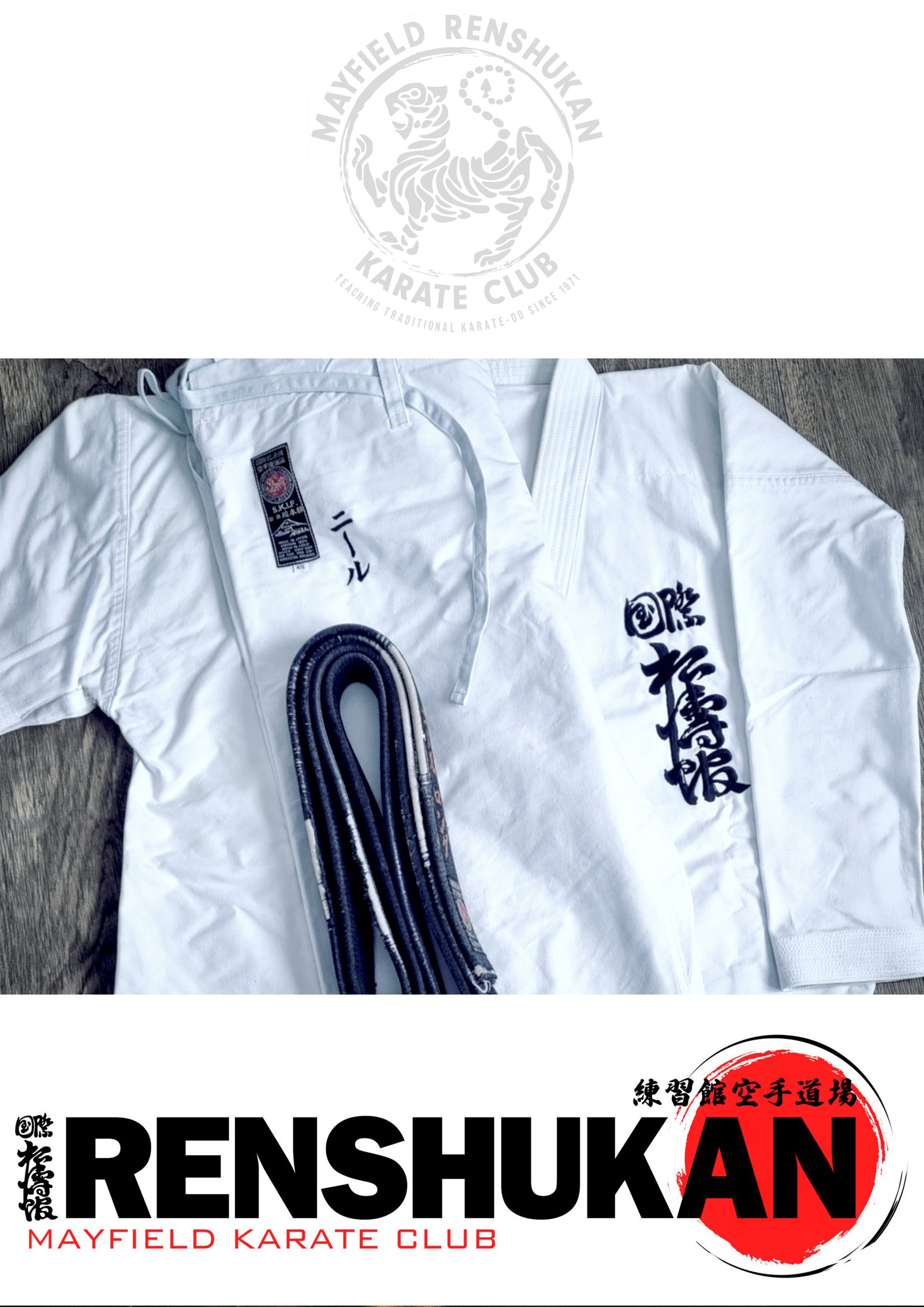
Your dōgi should be clean, presentable and properly worn. Turning up to training in a dirty or poorly maintained dōgi gives the impression that we do not take our training seriously.
The same applies to the obi and should be tied correctly and worn properly. It is not just something that prevents the jacket from opening. The higher grade we are, the more we should understand that our appearance and behaviour sets an example for those coming behind us.
PERSONAL HYGIENE
Karate is a contact activity, where we regularly train at close range with other people, and sometimes sweating heavily. For that reason, personal hygiene is a matter of importance.
Hands and feet should be clean, fingernails and toenails kept short and jewellery and other items that could cause injury should be removed before training.
You would think that these things may seem obvious, but unfortunately it is not always so.
WHEN THE CLASS IS IN PROGRESS
When the instructor is teaching, we listen.
There will always be times when we are tired, frustrated or perhaps being shown something we have practised many times before. Nevertheless, the instructor deserves our attention. Talking while the instructor is explaining a technique, joking around in the line, sitting casually against the wall or checking a phone sends a message that we are not interested in what is going on.
There is a time for conversation and a time for concentration.
RESPECT FOR SENIORITY
Traditional Karate-Dō has a system of seniority: Kōhai and Senpai.
The Kōhai-Senpai relationship reflects Japanese cultural values of discipline, order, respect and mentorship. It promotes mutual respect, learning and personal development in the Dōjō. It shapes the way students interact with each other in the Dōjō, emphasising a clear distinction between seniors (senpai) and juniors (kōhai).
Seniority brings responsibility. A karateka senior in grade should be an example to others. Junior karateka, in turn, should respect the experience of those who have spent many years training before them.
The relationship is one of mutual respect.
ACCEPTING CORRECTION
One of the most important lessons in Karate-Dō is that we still have much to learn.
Being corrected by an instructor is not a criticism. It is part of the learning process. Nobody becomes a good karateka by only being told what they are doing well. We should listen, try to understand and make the correction. A willingness to accept instruction is a sign of humility, and not a weakness.
ETIQUETTE OUTSIDE OF THE DŌJŌ
Dōjō etiquette does not stop when training finishes.
How we behave at gradings, competitions, seminars or at other Dōjō reflects not only on ourselves but also on the club we represent. When travelling as a group, we should show the same respect to other instructors, competitors, officials and Dōjō as we expect them to show us.
As karateka, we are ambassadors for our club and SKIF.
TRADITION IS SOMETHING WE PASS ON
It is tempting to regard some of this as old-fashioned.
Why does it matter if I arrive five minutes late?
Why does it matter if my dōgi is untidy?
Why does it matter if I don’t bow when entering the Dōjō?
If we say that we practise traditional Karate-Dō, then tradition should be seen in our behaviour as well as in our karate.
The Dōjō is a place where discipline is expected, respect is shown, and where everyone understands that they have responsibilities. These standards not only apply to beginners but also to senior black belts who have trained for decades. In fact, the longer we have trained, the greater our responsibility to uphold them.
If a senior karateka arrives late, wears an untidy dōgi or ignores Dōjō etiquette, those watching will learn that too. However, if they arrive prepared, bow with sincerity, listen, train hard, help others and show respect, then they demonstrate what Karate-Dō should look like.
That is how tradition survives.
Oss!