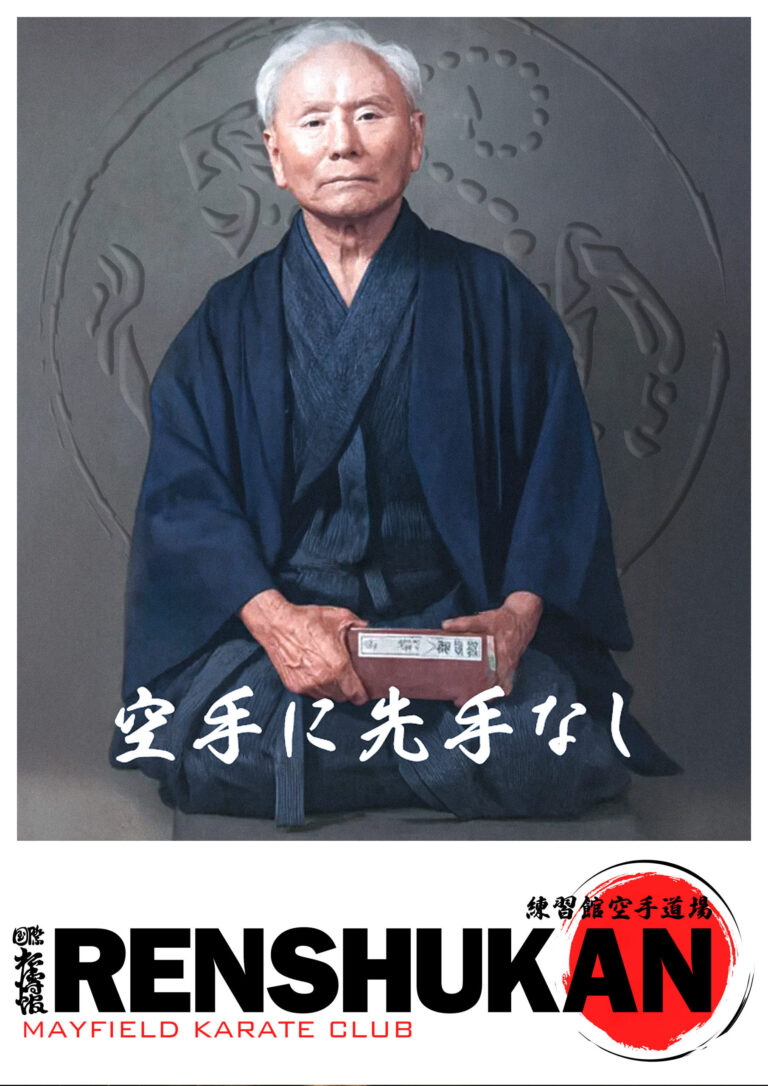


There is timing in everything. Timing in strategy cannot be mastered without a great deal of practice
Miyamoto Musashi
In Karate-Do, timing is everything. You can have great technique and strong spirit, but if your timing is off, then nothing really connects. Timing is basically when you choose to act in relation to your opponent. Traditionally, Karate-Do has three levels of timing. They’re simple ideas, but they teach us how we should approach both competition style kumite and self-defence.
- Go no Sen (後の先): Counterattack in response to an attack.
- Sen no Sen (先の先): Attack or counterattack launched simultaneously with your opponent’s attack.
- Sensen no Sen (先先の先): Pre-emptive attack in anticipation of your opponent fully committing to an attack.
Go no Sen
Perhaps the most fundamental and common strategy, especially for lower grades. It involves responding to an opponent’s attack. You allow the opponent to commit to their attack, and then you execute your counterattack immediately after their technique has been blocked or evaded. It emphasises solid defence first. You are waiting for your opponent to create an opening by moving, and then you seize that moment. Go no Sen requires excellent judgment of distance and fast reaction times.
Sen no Sen
Sen no Sen is a significant step up in timing compared to Go no Sen. Here, you are not simply waiting to counter. Your technique is initiated and lands at the exact moment or fractionally before your opponent’s technique can be fully delivered. It requires reading your opponent’s intention and movement before they fully commit. As soon as you notice that slight shift in balance or the drawing back of the arm that signals the beginning of a punch for example, you launch your own attack. You are trying to beat them to the punch by intercepting their intention.
Sensen no Sen
Sensen no Sen is the highest level of timing. It means to attack before your opponent has even fully committed or even begun to move. You are using Zanshin to detect a shift in your opponent’s mental or physical state that indicates an impending attack. Sensen no Sen is less about physical reaction and more about body language. You must be aware of your opponent’s stance, breathing and rhythm etc in order to anticipate their intent and then act before they can even launch their attack.
These concepts not only shape how we approach our training, but also our daily life:
- Go no Sen teaches us patience and control.
- Sen no Sen develops our responsiveness and our ability to make decisions quickly and confidently.
- Sennsen no Sen cultivates foresight, intuition and assertiveness.
Understanding these concepts teaches us awareness, patience and the ability to stay steady under pressure. In the Dojo, it applies to kumite and bunkai. Outside the Dojo, it’s about reading situations, avoiding trouble and making good decisions when things get tense.
Mastering these levels of timing requires practice of kihon, an understanding of distance (Ma-ai) and Zanshin. As you progress in your training, aim to move beyond Go no Sen and aim for the proactive Sen no Sen and Sensen no Sen.
Oss!